
Vaillant boiler repair in London
We repair current and older Vaillant boilers. Ring us, day or night.
- Vaillant ecoTEC boilers repaired and serviced
- All our engineers are Gas Safe registered
Makes we repair


How does booking a Vaillant repair work, and what does it cost?
Booking: ring us any time, day or night, or send your details and we ring you back. We'll ask what the boiler is doing, and its model and any code on the display if you can see them. You don't need to know what's wrong. Finding the fault is the engineer's job. Then we tell you when an engineer can come, anywhere in Greater London.
What it costs: a repair's price depends on the part it needs, how long the job takes and when it's done. Our rates are higher in the evening, overnight and at weekends. Once the engineer has found the fault, the rate for the repair is agreed in writing before any work starts.
What happens on a Vaillant repair visit?
A repair visit has three stages.

1. Before anything is touched
The engineer covers the floor around the boiler and asks what you have seen and heard since you rang.
2. Finding the fault
The engineer tells you which part has failed, whether they have it with them or must order it, and how long the work should take. No work is done until you say yes.
3. The repair
The engineer fits the part and checks the boiler runs as it should before leaving. The repair is guaranteed for 12 months, covering the parts we fit, the labour and any return visit.
What goes wrong on Vaillant boilers most often?
Vaillant's own help pages come back to the same problems:
- Losing pressure. Most often a leak at a radiator valve or a joint, sometimes inside the boiler, or simply after bleeding the radiators. If the pressure won't rise when topped up, or drops straight away, it needs an engineer.
- A frozen condensate pipe. In a frost the boiler gurgles and stops, showing F.28 or F.29, and on the current ecoTEC plus F.347.
- Hot water but cold radiators on a combi. Usually the diverter valve, an engineer's job.
- Noises. Kettling from limescale or the pump, gurgling from air, humming from the pump or fan.
- Leaks. From the pressure relief valve when the pressure is too high, from a seal, or from the heat exchanger.
- Not lighting. Often the home is already at the set temperature, the power is off, or the gas supply has stopped.
Whichever it is, we'll ask what the boiler is doing when you ring.
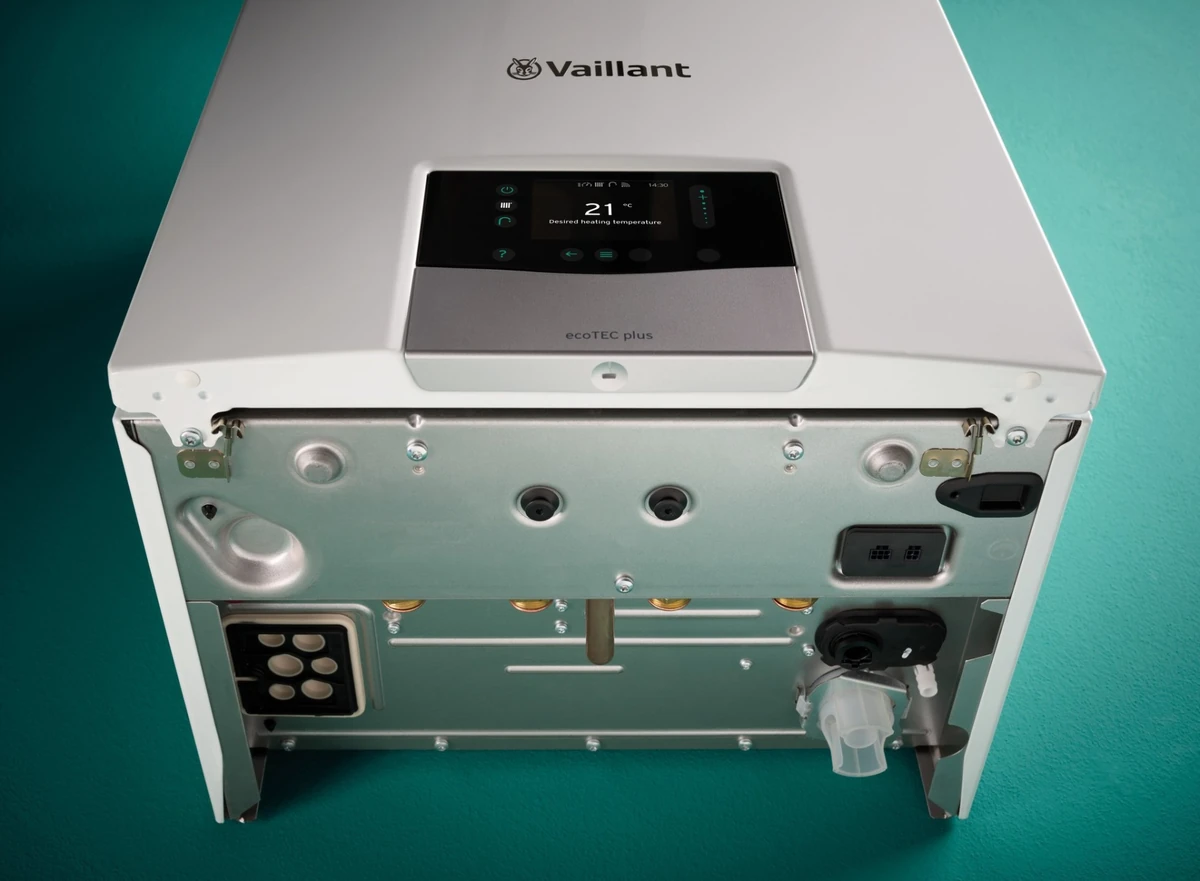
Sources: Vaillant's help pages on common problems, losing pressure, the condensate pipe, the diverter valve, noises, leaks and ignition, and its manual for the ecoTEC plus from 2023.
Vaillant fault codes and what they mean
On the current ecoTEC plus, a code shows as F. and three figures, such as F.029. On the boilers before it, a code shows as F. and two figures, such as F.29.
Most codes keep their meaning from one range to the next, but not all. F.25, F.27 and F.76 mean other things on other ranges, so each panel and list names its boilers.
Vaillant's manuals set three resets as the most to try, and a fault such as F.27 shouldn't be reset at all. If a reset doesn't clear a code, the boiler needs an engineer.
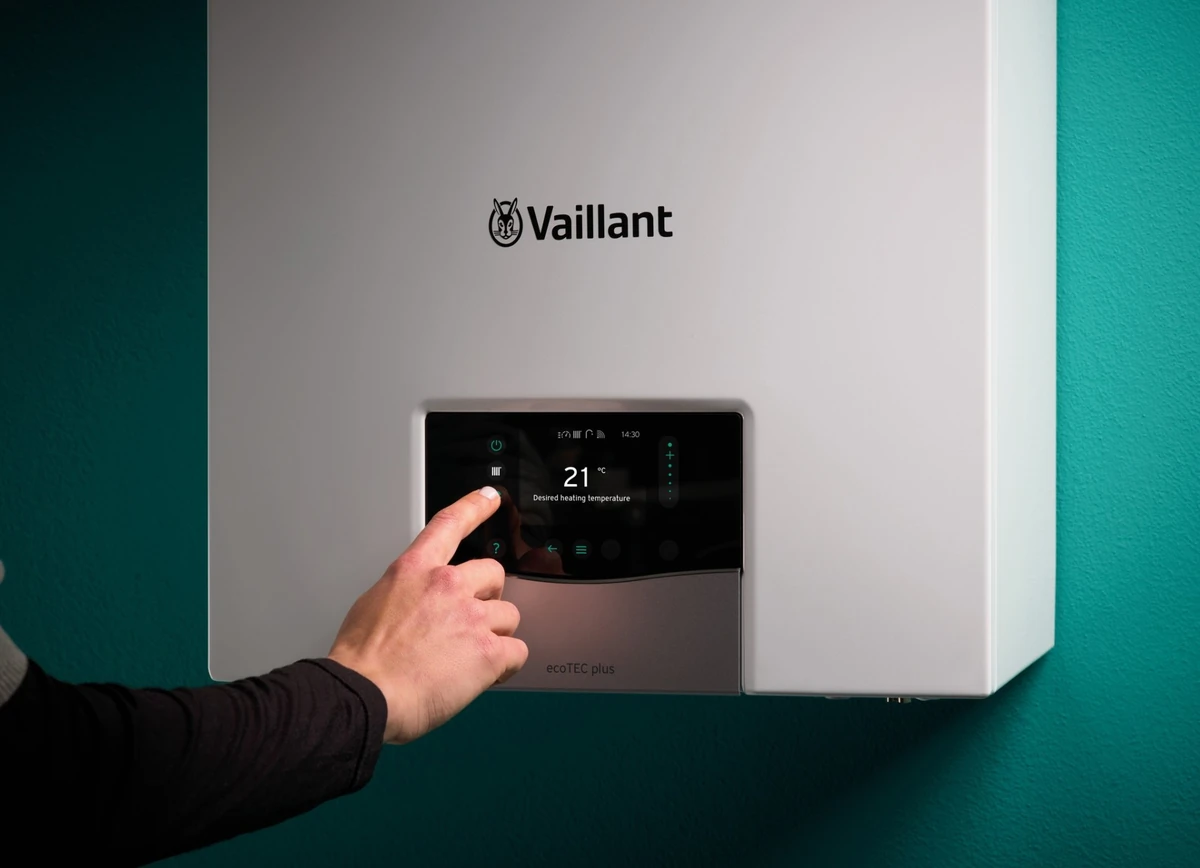
F.23Vaillant F.23 (F.023): the water isn't moving round fast enough
What it means: The water coming back to the boiler is much colder than the water leaving it.
Possible causes, as the manual lists them:
- air in the boiler or the system
- too little water
- the pump blocked or too weak
- the diverter valve
- the sensors
What you can do: check the pressure gauge, and top up if the user guide shows it low. Vaillant treats F.23 as a system fault for an engineer, so ring us if it comes back.
F.20Vaillant F.20 (F.020): the overheat cut-out has stopped the burner
What it means: The flow or return water passed its top temperature, so the safety cut-out shut the burner off.
Possible causes, as the manual lists them:
- too little water from low pressure or a leak
- the sensors and their wiring
- the pump
- the diverter valve
- the pressure sensor
What you can do:
- Check the pressure, and top up if it is low.
- See that the radiator valves are open.
- Reset the boiler once.
If it trips again, ring us. Vaillant points to the heating system.
F.24Vaillant F.24 (F.024): the temperature rose too fast
What it means: The water heated faster than it should, a sign it isn't carrying the heat away.
Possible causes:
- air in the system
- low pressure
- the pump blocked or too weak
- the pump's non-return valve
- the diverter valve
- the sensors
What you can do: check the pressure and top up if it is low, then reset.
F.27Vaillant F.27 (F.027): a flame where there shouldn't be one
What it means: The boiler senses a flame while the burner is off.
Possible causes:
- a gas valve that isn't sealing
- the main board
- damp on the electronics
On an older ecoTEC, F.27 means a faulty flame detector. On a turboMAX, it means no signal to the gas valve.
What you can do: nothing at home. With the gas valve a possible cause, don't keep resetting the boiler. Ring us instead.
F.76Vaillant F.76 (F.076): the main heat exchanger's overheat protection
What it means: On the ecoTEC of 2004 to 2006, F.76 means the overheat protection on the main heat exchanger has cut in. That range is the ecoTEC plus 612 to 637, 824, 831 and 837, and the ecoTEC pro 28.
Possible causes, as the manual lists them:
- the cable or connection of the fuse inside the heat exchanger
- the heat exchanger itself, which the 2004 edition of the manual says to replace
F.76 varies from one Vaillant range to another. On an ecoFIT pure, F.76 means the heat exchanger's safety cut-out is faulty, as its signal doesn't agree with the gas valve's. On the current ecoTEC plus, from 2023, F.076 means the overheat protection is active, and its manual points to a break in the wiring loom. The ecoTEC plus ..6/5-5's manual has no F.76.
What you can do: nothing at home, as the heat exchanger, its fuse and the wiring are an engineer's work. We'll ask for the model when you ring.
F.28Vaillant F.28: the boiler tried to light and found no flame
What it means: The boiler tried to light and found no flame.
Every cause of F.28, and what fixes it, is on the F.28 fault code page.
F.29Vaillant F.29 (F.029): the flame went out and wouldn't relight
What it means: The flame went out and wouldn't relight.
Every cause of F.29, and what fixes it, is on the F.29 fault code page.
F.22Vaillant F.22: the water pressure is too low
What it means: The water pressure is too low.
Every cause of F.22, and what fixes it, is on the F.22 fault code page.
F.75Vaillant F.75: the pressure doesn't rise when the pump starts
What it means: The pressure doesn't rise when the pump starts.
Every cause of F.75, and what fixes it, is on the F.75 fault code page.
F.54Vaillant F.54: not enough gas pressure at start-up
What it means: Not enough gas pressure at start-up. F.54 is a code of the ecoTEC plus ..6/5-5, and usually shows with F.28 or F.29 beside it.
Every cause of F.54, and what fixes it, is on the F.54 fault code page.
F.62Vaillant F.62 (F.062): the flame went out late after the gas valve shut
What it means: The flame went out late after the gas valve shut.
Every cause of F.62, and what fixes it, is on the F.62 fault code page.
F.83Vaillant F.83 (F.083): the burner lit, but the water barely warmed
What it means: The burner lit, but the water barely warmed.
Every cause of F.83, and what fixes it, is on the F.83 fault code page.
MoreEvery other Vaillant code, in one list
Every other code in Vaillant's manual for the ecoTEC plus ..6/5-5, the range in most London homes. On an older ecoTEC, F.25 and F.27 mean other things, and on a turboMAX, F.27 does, so we'll ask for the model too. The ecoTEC of 2004 to 2006 has its own list below.
F.00The flow temperature sensor's signal is lost
Possible causes
A faulty or unplugged sensor, or its wiring
F.01The return temperature sensor's signal is lost
Possible causes
A faulty or unplugged sensor, or its wiring
F.02The hot water outlet sensor's signal is lost (actoSTOR)
Possible causes
The sensor or its wiring
F.03The cylinder temperature sensor's signal is lost
Possible causes
The sensor or its wiring
F.10The flow sensor has a short circuit
Possible causes
The sensor, its plug or its wiring
F.11The return sensor has a short circuit
Possible causes
The sensor, its plug or its wiring
F.12The hot water outlet sensor has a short circuit
Possible causes
The sensor or its wiring
F.13The cylinder sensor has a short circuit
Possible causes
The sensor, its earth or its wiring
F.25A safety shut-down, as the flue gas is too hot
Possible causes
A blocked flue, wind blowing back, too little water or the pump
F.26The gas valve isn't working
Possible causes
The gas valve's motor or its wiring
F.32Fan fault
Possible causes
A jammed or faulty fan, its wiring, or a blocked flue
F.42Coding resistor fault
Possible causes
A short in the resistor or its wiring
F.49Fault on the link to the controls
Possible causes
A short or an overload on the controls' wiring
F.52The mass flow sensor isn't connected
Possible causes
The sensor or its wiring
F.53The gas flow through the gas valve isn't as expected
Possible causes
Low gas pressure, a wet or blocked filter, or the gas valve
F.55Carbon monoxide sensor fault
Possible causes
The sensor or its wiring
F.56A safety shut-down, as the carbon monoxide limit was passed
Possible causes
Most often the gas valve
F.57Fault in the combustion check
Possible causes
A corroded ignition electrode, or the main board
F.61The gas valve can't be controlled
Possible causes
Its wiring, the gas valve or the main board
F.63Memory chip fault
Possible causes
The main board
F.64Electronics or safety sensor fault
Possible causes
A sensor or its cable, the flame sensor, or the electronics
F.65The electronics are too hot
Possible causes
The board, or heat from around the boiler
F.67The flame signal makes no sense
Possible causes
Wiring, the flame monitor or the board
F.68Unstable flame signal
Possible causes
The gas and air mix, the gas pressure, a blocked condensate pipe or the electrode
F.70The boiler's device number is wrong or missing
Possible causes
It needs setting after a new board and display
F.71The flow sensor's reading isn't believable
Possible causes
The sensor's contact with the pipe
F.72The flow and return sensors disagree
Possible causes
The sensors or their contact with the pipes
F.73The water pressure sensor's signal is too low
Possible causes
The pressure, the sensor or its wiring
F.74The water pressure sensor's signal is too high
Possible causes
The pressure is too high, or the sensor
F.77Flue flap or condensate pump fault
Possible causes
A condensate pump overflowing, or the flap's wiring
F.78A hot water sensor setting at an outside control
Possible causes
A control fitted without the right setting
F.80actoSTOR inlet sensor fault
Possible causes
The sensor or its wiring
F.81The cylinder didn't charge in time
Possible causes
The sensors, the diverter valve, the pumps or a blocked heat exchanger
F.82External current anode fault
Possible causes
The anode or its wiring
F.84The flow and return readings aren't believable
Possible causes
Sensors fitted wrongly or swapped
F.85The sensors are fitted wrongly
Possible causes
The sensors' contact with the pipes
F.90The link to the actoSTOR module is lost
Possible causes
Its plug or wiring
F.91actoSTOR sensor fault
Possible causes
The sensor or its wiring
F.92The wrong gas type is set
Possible causes
The coding doesn't match the gas
F.93Combustion is outside its limits
Possible causes
The gas injector, fumes coming back in, or the gas setting
F.94The pressure sensors' readings aren't believable
Possible causes
The sensors or their wiring
No number"Communication fault" shows when the display can't reach the main board
Possible causes
The cable or plug between them
The current ecoTEC plus (from 2023): every other code
From Vaillant's manual for the ecoTEC plus ../1-5. The boiler also shows N. codes, when it keeps running in a back-up mode and needs an engineer, and I. codes:
- I.003, a service is due
- I.020, the pressure is low
- I.144, the control electrode is wearing out
F.000, F.001The flow or return sensor's signal is lost
Possible causes
Wiring, or the sensor
F.002, F.003The hot water or cylinder sensor's signal is lost
Possible causes
Wiring, or the sensor
F.010 to F.013A sensor has a short circuit (flow, return, hot water, cylinder)
Possible causes
Wiring, or the sensor
F.025The flue gas is too hot
Possible causes
Wiring, or the flue gas temperature monitor
F.032The fan's speed is out of range
Possible causes
A blocked or faulty fan, its wiring, a blocked flue or the board
F.035The air intake or the flue is blocked
Possible causes
The flue or air intake, a blocked condensate pipe, the gas pressure
F.040Too little air in the gas and air mix
Possible causes
The flue, the air intake, the condensate, the gas settings or the fan
F.042The coding resistor isn't valid
Possible causes
The wiring loom
F.044The flame signal is too low
Possible causes
The flue, the air intake, the condensate, the gas or the electrode
F.047The cylinder outlet sensor's reading isn't believable
Possible causes
Wiring, or the sensor
F.049The link to the controls is shorted or reversed
Possible causes
Wiring, or the board
F.057The combustion control and its back-up have both failed
Possible causes
The flue, the condensate, the gas, the fan or the board
F.061Control chip timing fault
Possible causes
The gas valve's wiring, or the board
F.063The board's memory test failed
Possible causes
The main board
F.064A sensor's signal couldn't be read
Possible causes
A sensor, or the board
F.065The electronics are too hot
Possible causes
Heat around the boiler, or the board
F.067, F.068The flame monitor is faulty, or its signal unstable
Possible causes
The board
F.070The boiler's device number is wrong or missing
Possible causes
Not set after parts were replaced
F.071The flow sensor's reading isn't believable
Possible causes
The sensor's position, or the sensor
F.072The flow and return readings are too far apart to be right
Possible causes
The sensors and their wiring
F.074The pressure sensor's signal is lost
Possible causes
Wiring, or the sensor
F.077The condensate pump or a flue flap is stopping the burner
Possible causes
The flap, the condensate pump or their wiring
F.078The control fitted isn't supported
Possible causes
The wrong control module, or a hot water sensor setting
F.080The cylinder's cold inlet sensor is faulty
Possible causes
The sensor
F.081The cylinder didn't charge
Possible causes
A blocked heat exchanger, the pump, the diverter valve or a sensor
F.084, F.085The flow and return readings aren't believable, or the sensors are on the wrong pipes
Possible causes
Sensors fitted wrongly
F.087The ignition transformer isn't connected
Possible causes
Its wiring, or the transformer
F.088The gas valve isn't connected
Possible causes
Its wiring
F.089The pump doesn't match the boiler
Possible causes
The wrong pump fitted
F.090The link to the internal cylinder is lost
Possible causes
Its wiring or plug
F.092A gas conversion wasn't finished
Possible causes
The setting
F.095, F.096The gas valve is at its lowest or highest step
Possible causes
The flue, the condensate, the gas, the burner or the gas valve
F.097The main board's self-test failed
Possible causes
The main board
F.105The gas valve needs setting after a part was replaced
Possible causes
The setting, or its wiring
F.110It wouldn't light, even with a richer mix
Possible causes
Heat not being carried away, then the same causes as F.028
F.194The board's power supply is faulty
Possible causes
The main board
F.195, F.196The mains voltage is far too low or too high
Possible causes
The electricity supply, or the pump
F.228, F.229It failed to light, or to relight, while already running in its back-up mode
Possible causes
As F.028 and F.029
F.235The air intake or the flue was blocked at its first start
Possible causes
The flue, or the air intake
F.281The flame went out while settling after lighting
Possible causes
Gas pressure, air in the gas, the flue, the condensate or the electrode
F.291The flame went out while settling after a relight
Possible causes
The gas, the flue, the electrode or the condensate
F.317The hot water flow sensor's reading isn't believable
Possible causes
Wiring, or the sensor
F.318The diverter valve isn't moving
Possible causes
Its wiring, or a stuck or faulty valve
F.320The pump is blocked, and couldn't free itself
Possible causes
Dirt or debris in the pump
F.321, F.322The pump's electronics are faulty, or it overheated
Possible causes
The pump
F.323The pump is running dry
Possible causes
Air in the boiler
F.324, F.325The pump's connection is broken, or the pump is faulty
Possible causes
The cable, or the pump
F.326The boiler's water check found two or more parts not working
Possible causes
The diverter valve, the pumps or the wiring
F.327The heating flow is held back, as no hot water circuit is connected
Possible causes
A cylinder bypass, or a blocked hot water circuit
F.330The pump didn't respond in the boiler's water check
Possible causes
Its wiring, or the pump
F.334 to F.338The flue settings weren't finished, or aren't allowed
Possible causes
The boiler's set-up
F.342, F.343The air flow is out of range, or its signal isn't believable
Possible causes
The fan, a dirty sensor or a blocked flue
F.344The control electrode is worn out
Possible causes
The electrode needs replacing
F.347Water from the condensate has backed up into the burner, which has stopped
Possible causes
A blocked or frozen condensate pipe, or its trap
F.363The display's memory test failed
Possible causes
The display
F.707The display and the main board can't talk to each other
Possible causes
The connection, the display or the board
F.905The link to a connected module is switched off
Possible causes
A module drawing too much current
The ecoTEC of 2004 to 2006: ecoTEC plus 612 to 637, 824, 831 and 837, and ecoTEC pro 28 (installation and servicing instructions 839592_03, March 2006, Table 8.4)
Every code in that manual's table, with the meaning it gives there. Some of its meanings differ from the later boilers':
- F.22 means the boiler fired with too little water.
- F.25 means a break in the wiring loom.
- F.27 means a fault in sensing the flame.
F. 0The flow sensor's circuit is open
What the manual lists
A broken sensor or cable, or a poor connection at the sensor or the board
F. 1The return sensor's circuit is open
What the manual lists
A broken sensor or cable, or a poor connection at the sensor or the board
F.10The flow sensor is shorted
What the manual lists
The sensor, a short in the wiring loom, or a cable touching the casing
F.11The return sensor is shorted
What the manual lists
The sensor, a short in the wiring loom, or a cable touching the casing
F.13The cylinder sensor is shorted
What the manual lists
The sensor, a short in the wiring loom, or a cable touching the casing
F.20The safety temperature limit was reached, read by the flow sensor
What the manual lists
The flow sensor not sitting properly on its pipe, or faulty, or the boiler not switching off
F.22A dry fire, when the boiler fired with too little water
What the manual lists
Too little water in the boiler, the water pressure sensor, or the cable to the pump or the sensor. The pump may also be blocked, faulty or too weak.
F.23A water shortage, with the flow and return too far apart
What the manual lists
The pump blocked, faulty or too weak, or the flow and return sensors swapped
F.24A water shortage, with the temperature rising too fast
What the manual lists
The pump blocked or too weak, air in the boiler, or the water pressure too low
F.25A break in the main heat module's wiring loom
What the manual lists
The loom
F.27The flame is sensed wrongly
What the manual lists
The flame detector
F.28The boiler didn't start: its attempts to light failed
What the manual lists
The gas supply: a faulty gas meter or gas pressure detector, air in the gas, low gas pressure, or a shut fire safety valve. Then the gas valve or its setting, the ignition parts, the flame-sensing current, the earthing or the board.
F.29The flame went out while running, and relighting failed
What the manual lists
A break in the gas supply, or the boiler's earthing
F.32The fan's speed is wrong
What the manual lists
A blocked fan, its plug, its speed sensor, the wiring loom or the board
F.49The voltage on the eBUS, the controls' link, is too low
What the manual lists
A short or an overload on the eBUS, or two power supplies on it
F.61The gas valve's control is faulty
What the manual lists
A short or an earth leak in the gas valve's wiring, the gas valve, or the board
F.62The gas valve was slow to shut off
What the manual lists
A leaking gas valve, or the board
F.63A memory (EEPROM) error
What the manual lists
The board
F.64An electronics or sensor fault
What the manual lists
A shorted flow or return sensor, or the board
F.65The electronics are too hot
What the manual lists
Heat from around the boiler, or the board
F.67The flame detector's signal is out of range
What the manual lists
The board
F.70No valid device number in the display or the main board
What the manual lists
Both parts replaced at once, and the number not set
F.71The flow sensor's reading is stuck
What the manual lists
The flow sensor
F.72A flow or return sensor fault
What the manual lists
The sensors, reading out of tolerance
F.73The water pressure sensor's signal is too low
What the manual lists
A broken or shorted cable to the sensor, or the sensor
F.74The water pressure sensor's signal is too high
What the manual lists
A short in its cable, or a fault inside the sensor
F.75No rise in pressure when the pump started
What the manual lists
The pressure sensor or the pump, air in the system or a faulty automatic air vent, or too little water in the boiler
F.76The main heat exchanger's overheat protection has cut in (its panel is above)
What the manual lists
The cable or connection of the fuse in the heat exchanger, or the heat exchanger itself
F.77The condensate pump, or a signal from an accessory, is blocking the heating
What the manual lists
A faulty condensate pump, or a flue flap's signal
F.78The set-up with an accessory is wrong
What the manual lists
A VR 65 link box connected to a combi
conThe display has no contact with the main board
What the manual lists
The connection between the display and the main board
Status codes, not faults: ecoTEC plus ..6/5-5 (installation and maintenance instructions 0020244997_07, 2021, Appendix D)
S. codes show what the boiler is doing at that moment, and none of them is a breakdown. The user guide shows the current one when two keys are pressed together (the Live monitor). The current ecoTEC plus shows S. and three figures, such as S.004, from a list of its own.
S.00The heating isn't calling for heat, so the burner is off
What the manual lists
A status, not a fault
S.01, S.02, S.03For the heating, the fan starts, the pump runs before lighting, then the burner lights
What the manual lists
A status, not a fault
S.04The burner is on for the heating
What the manual lists
A status, not a fault
S.05, S.06, S.07For the heating, the pump and fan, the fan, or the pump running on after the burner stops
What the manual lists
A status, not a fault
S.08For the heating, the anti-cycling wait before the burner lights again (the user guide shows the minutes left)
What the manual lists
A status, not a fault
S.10A call for hot water, through the flow sensor
What the manual lists
A status, not a fault
S.11, S.13, S.14For hot water, the fan starting, lighting, then the burner on
What the manual lists
A status, not a fault
S.15, S.16, S.17For hot water, the pump and fan, the fan, or the pump running on
What the manual lists
A status, not a fault
S.20 to S.28Hot water in comfort mode with a warm start, or with a cylinder. The same steps follow, from the call (S.20) and the burner on (S.24) to the anti-cycling wait (S.28).
What the manual lists
A status, not a fault
S.30No call for heat, as the room thermostat is holding the heating off
What the manual lists
A status, not a fault
S.31Summer mode, with the heating off and no call for heat
What the manual lists
A status, not a fault
S.32A wait at the fan's start-up, its speed out of step
What the manual lists
A status, not a fault
S.34Frost protection is running for the heating
What the manual lists
A status, not a fault
S.39A surface-mounted thermostat or the condensate pump has tripped
What the manual lists
A status. What tripped it is for an engineer.
S.40Comfort protection, where the boiler keeps running with less comfort after spotting a fault
What the manual lists
A status. The manual has the engineer read the fault memory. The boiler goes back to normal by itself when no fault is stored.
S.41The system pressure is too high
What the manual lists
A status
S.42The flue non-return flap's signal, or a faulty condensate pump, is holding the burner off
What the manual lists
A status. The call for heat is blocked.
S.46Comfort protection after a loss of flame at minimum output
What the manual lists
A status
S.53A wait, with too little water and the flow and return too far apart
What the manual lists
A status. The boiler holds back for a while.
S.54A wait, as a fast temperature rise points to low water pressure
What the manual lists
A status. The boiler blocks for a while.
S.57A wait after the measuring programme
What the manual lists
A status, not a fault
S.58The burner's output is being held down
What the manual lists
A status, not a fault
S.61The gas type set doesn't match the board's coding resistor (as F.92)
What the manual lists
A status the manual names as a fault
S.62The CO2 needs setting
What the manual lists
A status, for the engineer
S.63A fault message that the gas route needs checking
What the manual lists
A status the manual names as a fault
S.76A service message to check the water pressure
What the manual lists
A service message, not a breakdown
S.88The purge programme is running, clearing air
What the manual lists
A status, not a fault
S.92, S.93, S.96 to S.99Self-tests of the water flow (S.92), the sensors and the water pressure sensor (S.96 to S.98), and Vaillant's own self-test (S.99). S.93 means a flue gas reading isn't possible now.
What the manual lists
A status, not a fault
Sources, checked on 6 October 2026: Vaillant's boiler fault codes page, and its installation and maintenance manuals for the ecoTEC plus ..6/5-5 (0020244997_07, July 2021) and the ecoTEC plus from 2023 (0020308118_06, August 2024), from Vaillant's literature finder.
Which Vaillant boiler do you have, and how does it show a fault?
Vaillant is one of the makes we fit most. Its boilers show a fault in one of a few ways, depending on their age. The model is on the data plate under the boiler, and we'll ask for it and the code when you ring.
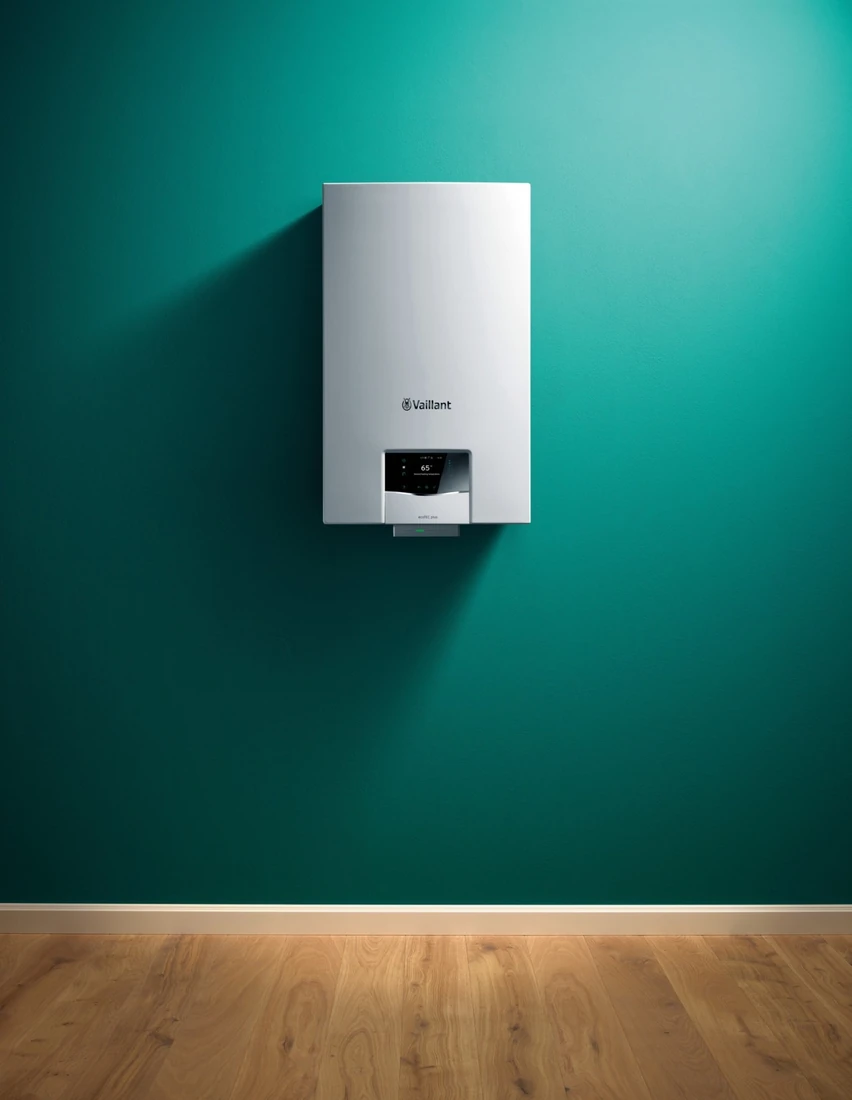
Not every code is a fault:
- An S. code shows what the boiler is doing, such as heating or waiting.
- A spanner, or an I. code on the current range, means a service is due, and the boiler keeps running.
How do you reset a Vaillant boiler?
A Vaillant boiler resets in its own way on each range:
- ecoTEC plus from 2023: press the reset key for more than 3 seconds. A shorter press puts it on standby.
- ecoTEC plus ..6/5-5, ecoTEC pro, ecoTEC exclusive, ecoFIT pure and the open vent: press the reset key for a second.
- turboMAX plus, thermoCOMPACT and turboMAX pro: hold Reset for about a second.
- The older TURBOmax VUW E and VUW /1 E: turn the central heating control to its reset position and let go.
Try a reset three times at most. If the code still comes back, ring us.
The pressure: with the system cold, most Vaillant combis and system boilers should read 1 to 2 bar. They need topping up below 0.8, and at 0.5 the boiler stops and shows F.22. On the current ecoTEC plus, 1.5 bar is a good level, 1.0 the least and 2.5 the most. The open vent needs no topping up. The user guide shows where the filling loop is.
A frozen condensate pipe can be thawed where it is at ground level and easy to reach. Use warm cloths or warm, never boiling, water, then reset the boiler. When a boiler won't fire up, and frozen condensate pipes.
Sources: Vaillant's user guides and installation manuals for each range, and its page on the condensate pipe.
Is your Vaillant boiler still under guarantee?
Vaillant's guarantee depends on the boiler and who fitted it:
- The ecoTEC plus has 5 years, and up to 10 when fitted by an installer in Vaillant's scheme with its Boiler Protection Kit, a filter.
- The ecoTEC exclusive also reaches 10 years.
- The ecoTEC pro and ecoFIT pure start at 2 years.
The boiler must be registered within 30 days of fitting, or the guarantee falls to 12 months. It must also be serviced every year by Vaillant or any Gas Safe registered engineer, recorded in the Benchmark logbook.
While the guarantee runs, Vaillant or an engineer it authorises carries out the repairs. Vaillant doesn't pay other engineers' invoices unless it agreed in writing first. Its terms say parts that aren't Vaillant's own void the guarantee. Topping up the pressure, bleeding the radiators and thawing a frozen condensate pipe aren't covered.
A boiler still under its maker's guarantee is usually repaired by the maker, at no charge, so ring Vaillant first. Once the guarantee has ended, or for a fault it doesn't cover, ring us. We are an independent firm, with no connection with Vaillant.
Sources: Vaillant's domestic boiler guarantee terms, read on 6 October 2026, and Vaillant's range pages.
What does a Vaillant boiler service cover?
Vaillant asks for an inspection every year by a competent person. On the current ecoTEC plus, the service interval must be no longer than a year. The manual's checklist covers:
- the combustion readings
- the flue
- the condensate pipe and its trap, cleaned and refilled
- the heat cell
- the heating water and its inhibitor
- the gas rate and leak checks
Everything is recorded in the Benchmark service record. A spanner on the display, or I.003 on the current range, means a service is due.
We service every Vaillant model, and give you the rate on the call. What a boiler service includes, check by check.
Do you cover my part of London?
Yes: we travel all over Greater London, day and night, to repair Vaillant boilers in every borough, north and south of the Thames. Pick your side of the river to see the areas.
North of the river
Every borough north of the Thames: Barnet and Enfield at the top, Hillingdon in the west, Havering in the east, and central London in between.
South of the river
Every borough south of the Thames: Richmond and Kingston in the west, Bexley in the east, and down through Croydon to Sutton and Bromley.
The other makes we repair
Every main make, combi, system and regular. Pick yours for its common faults, its codes and how we repair it.















Questions about Vaillant boilers
Do I need to know what's wrong with my Vaillant boiler before I ring?
No. Ring and say what the boiler is doing, or what you can see or hear, and we'll ask the rest. Finding the fault is the engineer's job.
Do you charge more in the evening or at weekends?
Yes. Our rates are higher in the evening, overnight and at weekends.
Can you repair an older Vaillant boiler?
Usually, yes. It depends on the boiler's condition and whether its parts are still made. We'll ask for the model when you ring.
Is my Vaillant boiler worth repairing?
Often, yes. Age alone doesn't decide it. What decides it is the rate for the repair against a new boiler, and how often the boiler has failed. The engineer gives you the rate for the repair, and the choice is yours. When a new boiler makes more sense.
Will a repair affect my Vaillant guarantee?
While the guarantee runs, ring Vaillant first. The maker usually repairs a boiler under guarantee itself, and its terms say who may work on it. Once it has ended, any Gas Safe registered engineer can repair it.
Do you fit Vaillant's own parts?
Yes, the maker's own parts wherever they are available. Each repair is guaranteed for 12 months, covering the parts we fit, the labour and any return visit.
How much does a Vaillant boiler repair cost?
The cost of a repair depends on the part, how long the job takes and when it's done. The rate is agreed in writing before the repair starts. How our rates work.
Why does my Vaillant boiler keep losing pressure?
Vaillant names leaks first when a boiler keeps losing pressure, most often at a radiator valve or a joint. Then it names corroded pipework, a leak inside the boiler or a faulty part. Bleeding the radiators lowers the pressure too. If the pressure won't stay up after topping up, ring us.
Why does my Vaillant show F.28 or F.29 in cold weather?
Vaillant links F.28 and F.29 to a frozen condensate pipe in a frost, when the boiler gurgles and stops. Thaw a pipe at ground level with warm, never boiling, water, then reset the boiler. What F.28 means on every make.
What does the spanner on my Vaillant boiler mean?
The spanner on a Vaillant boiler means a service is due. The boiler has no fault and keeps running. If the pressure figure flashes beside the spanner, the system needs topping up as well.
Is F.029 the same as F.29?
Yes, F.029 and F.29 both mean the flame went out and wouldn't relight. The ecoTEC plus made since 2023 shows codes with three figures, F.029. The boilers before it show two figures, F.29. A few other codes change meaning from one range to another, such as F.76, so we'll ask for the model.
How long do Vaillant boilers last?
Vaillant says its boilers last up to 15 years or more with a yearly service. Age alone doesn't decide whether to repair one.
Who makes Vaillant boilers?
The Vaillant Group, a family-owned company founded in Germany in 1874, makes Vaillant boilers. Its UK boilers are made at Belper in Derbyshire, and Glow-worm is its British sister brand. Glow-worm boilers: their codes and repairs.
Don't know what has failed? You don't have to.Ring and say what you can see or hear. Finding the fault is our job.
Calls answered 24 hours a day
A real person answers and gives you the rate on the call. No work starts until you say yes, and repairs are guaranteed for 12 months: parts, labour and any return visit.